
Concrete sidewalk building in Longview TX - a walk that stays firm and sheds water
Cracked, sunken or puddled walk to your door? We dig out the soft ground and pour a new one that's firm underfoot and sheds water.
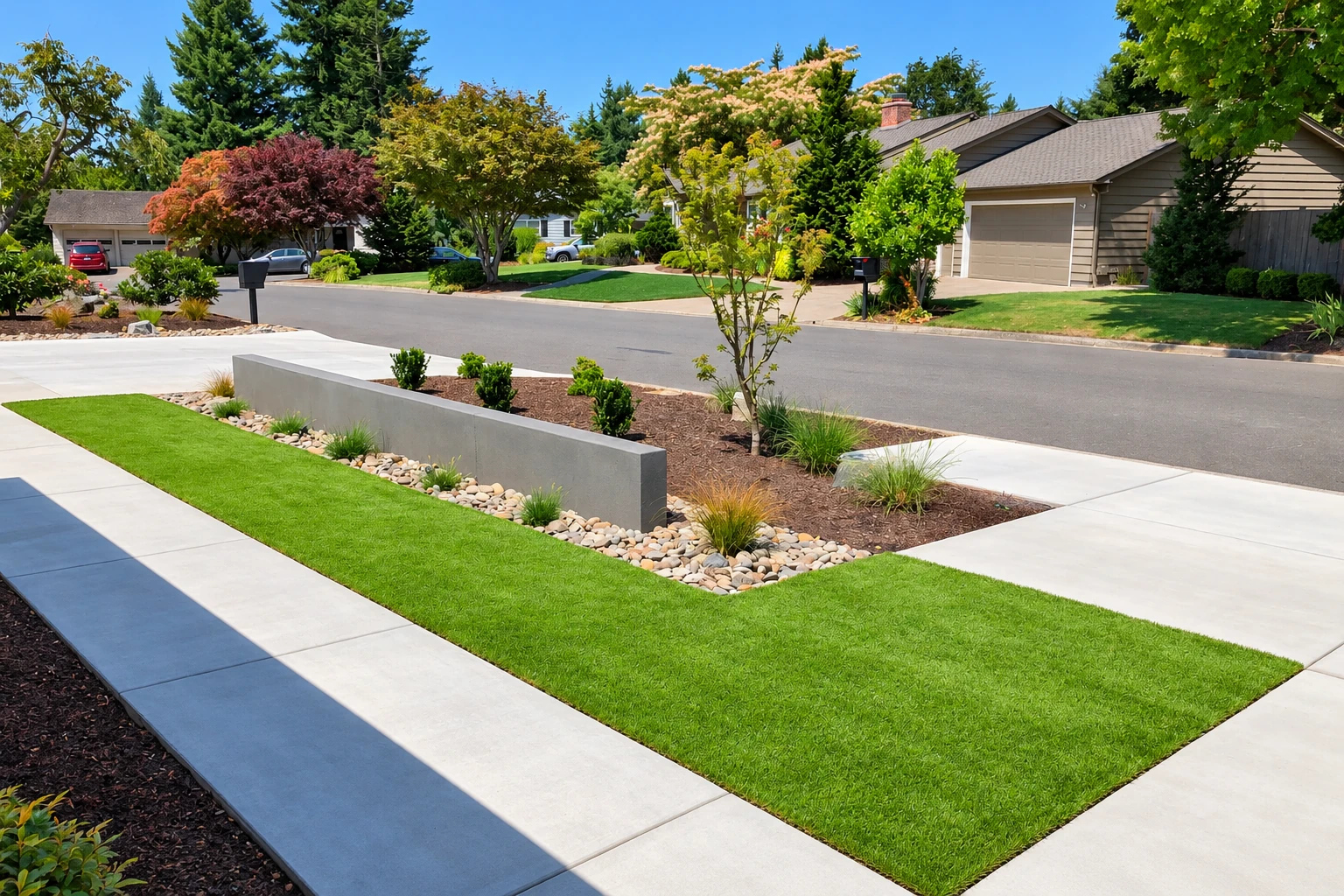
Soft ground dug out
We remove unstable dirt and pack a firm base.
Pitched to shed water
A slight slope so water runs off, not toward the house.
Sized for the load
Thicker concrete where delivery trucks will cross the walk.
Joints in the right place
Cut so the concrete cracks where we choose, not randomly.
What goes into building a concrete sidewalk in Longview?
Concrete sidewalk building in Longview means digging out soft ground, packing a firm base and pouring a walk with a slight pitch, so you get a path that stays firm and doesn't hold water.
A walk needs firm ground and a little pitch to shed water, so we dig out the soft stuff, pack a base in its place and only then build the forms. The ground under the walk, the subgrade, gets more of my time than the surface, because a nice finish on bad dirt is just a slower crack.
Price moves with the walk's length and width, how much bad dirt comes out, how thick it needs to be and how easy it is to reach. If the budget gets tight, trim the finish before the base, because you can't fix the base later without tearing out the walk. The schedule turns on any permit, the weather and the curing wait, and your written estimate lists what's in it.
- A base dug out and packed firm
- A walk pitched to shed water
- Joints cut where cracks should go
- A written estimate you can compare
How do you know your sidewalk needs replacing?
If your walk has started to crack, sink or hold water, or you're tired of a muddy path to the door, it's worth a look.
Cracks that keep spreading
A crack that widens or splits into more usually means the ground underneath moved, and the surface is just reporting it.
Sections that sank or lifted
When one section sits lower or higher than the next, the dirt under it settled or got pushed, and you get a trip edge.
Water pooling on the walk
Puddles that sit after rain mean the walk lost its pitch or never had one, and standing water wears concrete down.
Runoff heading toward the house
If water runs off the walk toward your foundation instead of the yard, the slope is wrong and worth fixing.
Chipping and a dusty top
A surface that flakes or turns to powder often came from a hot midday pour or poor curing. It doesn't get better.
A path worn in the grass
If everybody already walks the same line across the yard, the lawn has picked the route. We just pave it.
Get a price on your sidewalk
Send the walk's rough length and width and whether trucks cross it. We reply within one business day to set a free, no-obligation look on site.
What I look at before a sidewalk
Before I recommend anything, I walk the route, push on the ground and watch where the water goes, because the walk is only as good as what's under it.
The ground underneath
I look for soft dirt, roots and anything organic that will rot and settle, because all of it has to come out before we form.
Where the water runs
I watch which way the yard drains so the walk can shed water away from the house instead of toward it.
What will cross it
Feet, a mower or a delivery truck. Anything heavier than people changes how thick the walk needs to be.
The finish you want
A broom finish, a light brushed texture, gives your shoes grip when it's wet. If you'd rather have color or a pattern, that's decorative concrete.
What a sidewalk job looks like with us
We plan the dig and the pour around how you get to your door, so you know ahead of time which days the walk is off limits.
You call us
You call or send the form, and I call back to set a time to come look at the walk myself.
I measure and ask
I measure the route, check the ground and ask what the walk needs to handle, from foot traffic to delivery trucks.
Your written estimate
You get a written estimate that lists what's included, like hauling and cleanup, and what isn't, so you can compare bids.
Permit and pour date
If you go ahead, we take care of the permit side for our work and set a pour date with you.
Forms to walk-through
I'm on the job with the crew from forms to cleanup, then we walk it together and go over the curing wait.
Why Longview homeowners call Superior Longview Concrete Construction for sidewalks
You get the owner on site, a crew that cares more about the dirt than the finish, and a straight answer about whether your walk needs replacing at all.
The owner measures your walk
I come out to look and measure myself, then work alongside the crew through the forming, pouring and finishing.
In business since 2017
I learned the trade on another contractor's crew before starting this business in 2017. I still spend more time on the dirt than the concrete.
Fully licensed and insured
We're fully licensed and insured. Ask about either when I come out, and you'll get a straight answer.
Satisfaction guaranteed
If your walk isn't worth replacing, I'll say so. If it is, call (903) 331-0147 and I'll come measure it myself.
Concrete sidewalk building in Longview and the cities around it
In Longview, the city requires a permit for building anything in public right-of-way or easements, and Development Services takes sidewalk permit applications. A walk out toward the street usually crosses into that. If yours stays in your yard, the city is the one to ask, and where a permit applies we handle the application and inspections.
Before digging in city right-of-way, we call 1-800-DIG-TESS and city utilities at least two working days ahead, and since the city says many private lines there aren't on that system, we look into those first. We do the same work in Kilgore, Tyler and the cities around Longview.
Need a new walk out to the street in Longview?
(903) 331-0147Sidewalk questions we get asked
How thick should a concrete sidewalk be?
Michigan industry guidelines call for at least 4 inches of concrete on a walk, and at least 5 inches where delivery vehicles will cross. If trucks will use yours, plan for the thicker walk from the start, because nobody adds an inch after the pour.
How long does a new concrete sidewalk take to cure before I can walk on it?
Under the same Michigan guidelines, a new walk can open to traffic after 7 days of curing, or sooner if testing shows the concrete is strong enough. Curing is the stretch where the concrete gains its strength, so keep feet and wheels off it that first week.
How much does a concrete sidewalk cost in Longview?
Concrete work in Longview usually costs about $6 to $20 per square foot. Where your walk lands in that range depends on its size, how much soft ground comes out, how thick it needs to be and how easy it is to reach, and the written estimate from my visit spells it out.
Can I pull my own sidewalk permit in Longview?
You can, but not through the city's online permit portal, which is set up for general contractors, licensed trades and design professionals. Homeowners after a homestead exempt permit contact Development Services in person or at 903-237-1074, and if you pull it yourself, we'll tell you what we need from it.
What causes a concrete sidewalk to crack?
Most cracks start below the concrete, with soft dirt that settles, water with nowhere to go, or joints cut late or skipped. Control joints are grooves we cut on purpose so the concrete cracks there in a straight line instead of wherever it likes. Heat matters too, which is why the Michigan guidelines favor pouring in cooler hours like early morning, since concrete hardens faster as the air warms.
How do I make a new concrete sidewalk last longer?
Sealing it is the main upkeep, because a sealer limits how much water soaks into the concrete. Michigan industry guidelines say a penetrating sealer can go on 30 days after the pour and typically needs reapplying every three to five years, so it's worth putting on your regular list.
Ask us about your Longview sidewalk
Send your walk's rough size, and if your garage floor needs work too, I can look at both on the same visit.