
Concrete retaining walls in Longview TX - a wall that holds the slope and drains
Soil creeping down the bank or an old wall leaning out? We build a concrete wall with a real footing and drains you can keep clear.
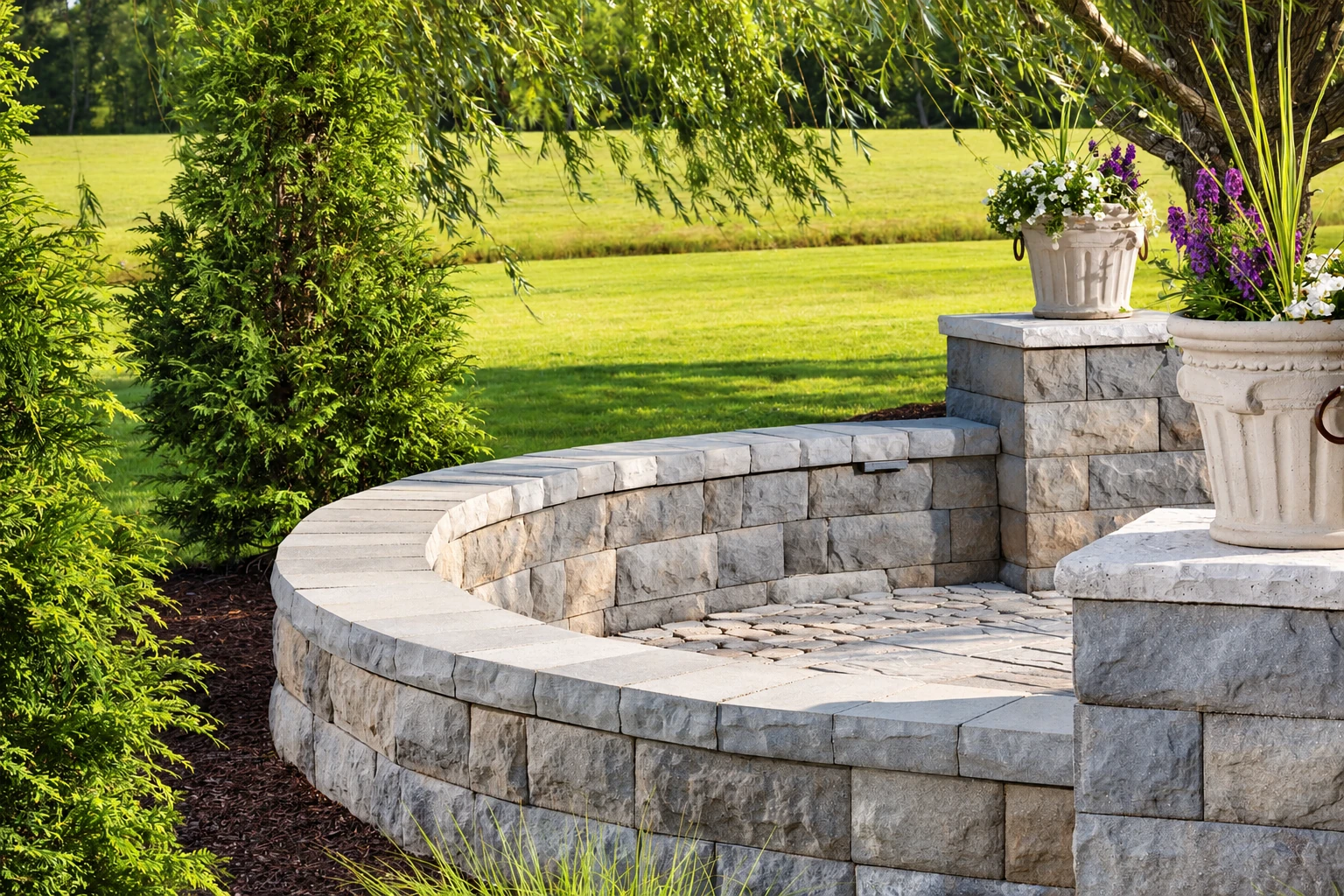
Wall type and layout
We match the wall type to your slope and load.
Footing and rebar
The footing and rebar, the steel inside, carry the load.
Drains planned in
Water gets a way out from behind the wall.
Backfill and cleanup
We pack the fill back in and haul off the mess.
Do you need a concrete retaining wall, and what goes into one?
A concrete retaining wall in Longview holds back soil that wants to slide toward your house, driveway or patio, and we build each one with the footing, steel and drains it needs to keep holding.
The wall is the part you see. The work happens underneath and behind it, in the footing it stands on, the steel inside and the gravel and drains that let water out. Height alone doesn't tell you the footing size or how much steel, so those come from the wall's design or the code that applies. If your wall needs an engineered design, I'll say so before we bid.
Price moves with the length and height of the wall, the design it needs, how hard the site is to reach and how much digging and hauling it takes. The schedule turns on the design, any permit and the weather on pour day. Your written estimate lists what's in it, like hauling and cleanup, so you can line it up against other bids.
- A wall type that fits your slope
- Drain outlets you can reach and clear
- Backfill packed in layers, not dumped
- Ground graded so water runs away
How do you know your yard needs a retaining wall?
Most people call about a wall when dirt starts going where it shouldn't, or when the old wall starts going there with it.
Soil washing onto the drive
After a hard rain, dirt and mulch end up on your driveway or patio because nothing is holding the slope above it.
An old wall leaning out
A wall tipping forward at the top usually means the footing or the drainage behind it has stopped doing its job.
Water seeping through the face
Wet streaks or puddles at the base mean water is building up behind the wall instead of draining out.
Cracks that keep growing
A hairline crack can be harmless, but one that widens or shifts each season means the wall is carrying more than it should.
A bank you can't use
A slope too steep to mow can become flat ground for a yard, a shed or a shop with a concrete floor.
A patio near a drop-off
A patio or pool deck poured close to a drop can settle toward it unless something holds the ground beside it.
Get your retaining wall estimate
Send the rough length and height, a few photos of the slope and any driveway plans. We reply within one business day to set a free, no-obligation visit, and the call usually comes from me.
What we check before building a retaining wall
I walk the slope and measure before I recommend anything, because the wall type, the footing and the drains all depend on what the ground and the water are doing.
The slope and the space
How tall the bank is, how much room there is at the bottom and where the wall can sit without crowding the house.
Where the water goes
I look at where runoff comes from and where the outlets can empty, so water leaves the yard instead of piling up behind the wall.
What's planned near it
Changing the fill, adding a driveway near the wall or letting water build up behind it can undo a design, so I ask about your plans first.
How a retaining wall job runs
We plan the job around your yard and what you need the wall to do, and the design questions get answered before anyone picks up a shovel.
You call us
You call or send the form, and I call back to set a time to come look at the slope myself.
The site visit
I measure, look at the ground and the water, and ask what you need the wall to hold back.
Your written estimate
You get a written estimate that says what's in it and what isn't, including whether the wall needs an engineered design.
Forms, steel and pour
If you go ahead, we take care of the permit side for our work, set a pour date, then dig, form, set the steel and pour.
Walk-through
Once the yard is cleaned up, I walk the wall with you and show you where the drain outlets are and how to keep them clear.
Why Longview homeowners call Superior Longview Concrete Construction for retaining walls
Concrete is hard to take back once it's poured, so I spend the time on the parts you won't see later, the footing, the drains and where the water goes.
Building in Longview since 2017
I learned the trade on another contractor's crew, then started this business in Longview in 2017.
The owner on your job
I do the measuring myself, and I work alongside our crew while they form, pour and finish your wall.
Fully licensed and insured
We're fully licensed and insured for the work we do on your property, from digging the footing to the last of the backfill.
A straight no when it's right
I'd rather give you a straight no than sell you a wall you don't need. Satisfaction guaranteed. Call (903) 331-0147 to start.
Concrete retaining walls in Longview and the cities around it
A lot of Longview is hilly ground, so many of the walls we're asked about would sit on or near a slope. TxDOT's guidance for Texas road projects says to keep walls off slopes where possible, because a slope in front of a wall sharply cuts its resistance. Soil that swells when wet matters too, since research in Texas found it pushes harder on cantilever walls than the usual estimates, mostly near the top.
If you have a code question before a permit is issued, the city's Building Inspection staff will answer it for homeowners. We're based in Longview and work the cities around it, including Kilgore, White Oak and Gladewater, and if yours isn't on our list, call and ask.
Got a bank that keeps sliding toward the house?
(903) 331-0147Retaining wall questions we hear
What is the difference between a gravity and a cantilever retaining wall?
A gravity wall holds soil back with its own weight and little or no steel, while a cantilever wall is a reinforced wall tied to a footing. On a cantilever wall, the soil sitting on the back part of the footing, the heel, does most of the holding, so the footing matters as much as the wall. I'll tell you which one I'd build for your slope and why.
How much does a concrete retaining wall cost in Texas?
Retaining wall construction in Texas usually costs about $30 to $39 per square foot. That's the going rate across the state, not our price, and yours moves with the design, how complex it is, how easy the site is to reach and how much work the job takes. Our written estimate for your wall lists what's included, like hauling and cleanup.
Who do I contact about a retaining wall permit in Longview?
If you're pulling a homestead exempt permit yourself, contact the city's Development Services in person or by phone, because the online portal is set up for contractors and design professionals. Where the city requires a permit for our work, we handle the application and inspections. If you're pulling your own, we'll tell you what we need from it.
Why does drainage matter so much for a retaining wall?
Water trapped behind a wall can add a lot of load to it and push leaks through the face. A proper setup usually includes drain gravel, a filter fabric, perforated drain outlets and ground sloped so surface water runs off. We plan the drains before we plan the pour.
How do I keep retaining wall drains from clogging?
Keep the outlets clear of plants, dirt and trash so water can always get out. Research found plain weep holes often clog from poor backfill, plants, wildlife or trash, which cancels the point of having them. Ask any builder how their drains will be kept open, ours included.
What is the best way to build a retaining wall near a property line?
Use a footing that stays on your side, and some cantilever walls are built with a footing that sticks out in one direction only for exactly that reason. Where the line runs shapes the design, so have your survey handy when I come out to measure.
Get a retaining wall estimate in Longview
We answer the phone seven days a week, so call (903) 331-0147 or send the form with a few photos of your slope.