
Concrete Driveway Building in Longview TX - Water Runs to the Street, Not Your Garage
Cracked, sinking or puddled driveway? We break out the old one, build the base right and pour a slab that drains to the street.
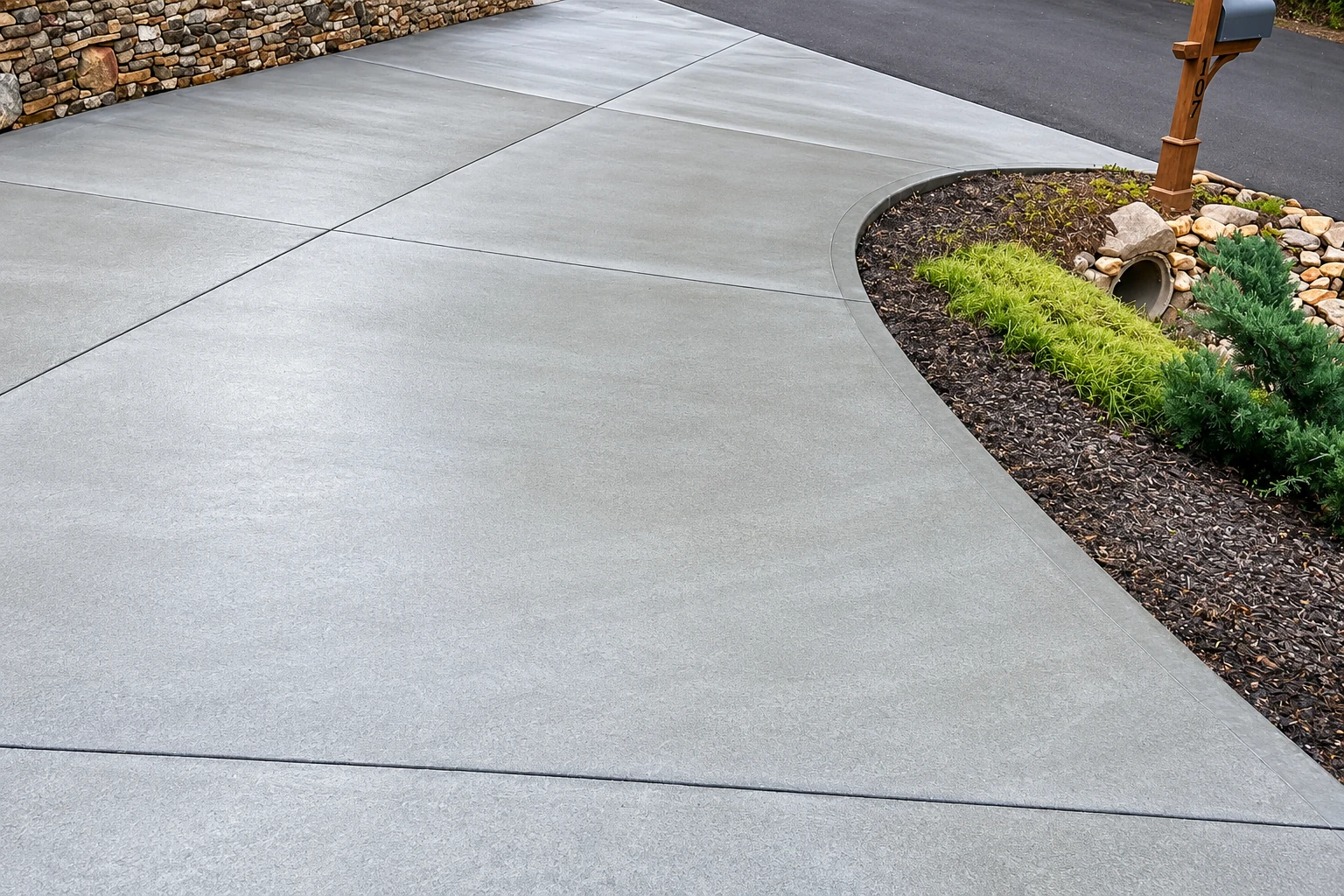
Grade set first
We set the slope before any forms go in.
Base dug and packed
Soft dirt and roots come out, then the base gets packed.
Thickness for your vehicles
We plan the slab around what you'll park on it.
Joints cut on purpose
Cut joints give the slab planned places to crack.
What goes into building a new concrete driveway in Longview?
Concrete driveway building in Longview means digging out and packing the ground, setting the slope so water runs to the street, then forming, pouring and finishing a slab thick enough for what you park on it. Most of the real work happens before the concrete truck shows up.
Most of a driveway is the part you never see. We dig out the soft dirt and roots, pack the subgrade, which is the ground the slab sits on, and set the grade so water heads for the street and not your garage, all before a single form goes in. I'd rather spend the extra time there than explain a crack later.
Price mostly follows the size, the thickness and how much ground work there is, plus breaking out and hauling off an old drive if you have one. A pattern or color from our stamped concrete work adds to it. The schedule turns on the permit, the weather on pour day and curing, the wait while fresh concrete gains strength. Your written estimate spells all of that out.
- A slope that sends water to the street
- Thickness planned for your vehicles
- A base dug out and packed
- Joints cut where we chose them
How do you know it's time for a new driveway?
Most driveways warn you before they fail outright, and the warning signs usually point to the ground underneath, not the concrete on top.
Cracks that keep spreading
A hairline crack is just concrete being concrete. Cracks that widen, branch out or lift at the edges usually mean the base gave way.
Sections sinking or tilting
When one section sits lower than the next, the dirt under it settled, often because it was raked level instead of packed.
Water pooling by the garage
Puddles that sit at the garage door or against the house mean the slope runs the wrong way, and patching won't change that.
A chipping, dusty surface
A top that flakes or wears to powder often goes back to a pour finished in midday heat, when the surface dried too fast.
Gravel that washes out
A gravel or dirt drive that ruts after every rain and tracks mud into the garage is one of the most common reasons people call.
Heavier vehicles coming
A new truck, trailer or RV can ask more than an old, thin slab was built to carry, so it pays to plan ahead.
Get your driveway estimate
Send your driveway's rough size and what you'll park on it. We reply within one business day, usually me, to set a free on-site estimate with no obligation.
What I check before quoting your driveway
I come out and measure the job myself, and before I put a number on paper I look at the ground, the slope and what the slab has to carry.
Where the water goes
I check which way the yard and the street fall, so the grade sends water to the street and away from the garage.
What's under it now
Old concrete, roots, soft fill and utility trenches all change how much digging and packing the subgrade needs before the pour.
What you'll park on it
A car, a work truck and a camper ask different things of a slab, and that changes the thickness and the plan.
Where it meets everything else
Where the drive meets the garage floor or sidewalk, we leave an isolation joint, a gap that lets each slab move on its own.
How a driveway job runs with us
We plan the job around your parking, since you lose the driveway from tear-out until the concrete has cured, and we pick the pour date with you.
You call us
You call or send the form, and I call you back to set a time to come look at the driveway.
I come measure
I walk the site, measure, check the slope and ask what you'll be parking on it, since that changes the plan.
Written estimate
You get a written estimate that says what's in it and what isn't, hauling and cleanup included, so you can compare bids fairly.
Permit and prep
If you go ahead, we take care of the permit side for our work, set a pour date, then dig out, pack and form.
Pour and walk-through
I'm on the job with the crew from forms to cleanup, and we walk the finished driveway with you before we leave.
Why Longview homeowners call Superior Longview Concrete Construction for driveways
From the first visit to cleanup, you deal with the person who measured your driveway, and the work matches what the written estimate said.
The owner measures and pours
I measure every job myself and work alongside the crew on pour day, so the plan you approved is the plan that gets built.
In business since 2017
Nine years in, driveways, patios and slab work with the drainage worked out first are most of what people call us for.
Fully licensed and insured
We carry both on every job, and we'll show you the paperwork while you're comparing bids.
Satisfaction guaranteed
It starts with a straight answer, so if your driveway doesn't need replacing yet, I'll say so rather than sell you a pour.
Building concrete driveways in Longview and nearby
The City of Longview's Development Services department handles permits, and where the city requires one for our work, we handle the application and inspections with that office. Before anyone digs, the city's permit instructions require a call to Texas Excavation Safety Systems at 1-800-DIG-TESS at least two working days ahead.
Most of Longview is in Gregg County, with a small piece of the east side in Harrison County. We build driveways on both sides of that line and in nearby cities like Kilgore and White Oak, and the calls are much the same: older drives that settled, and newer ones holding water by the garage.
Planning a new driveway in Longview? Call and talk it through.
(903) 331-0147Driveway questions we hear most
How thick should a concrete driveway be in Longview?
For passenger cars, driveway planning usually starts around a 4-inch slab. Going to 5 inches adds some concrete cost but, by industry figures, nearly 50% more load the slab can carry, which matters most if a heavy truck, trailer or RV will park there. Weak ground underneath can change the design too, so tell me early what you'll be parking.
How long does a new concrete driveway need to cure before I can drive on it?
New concrete should cure for at least a week before anyone drives on it. A car on it sooner asks more of the slab than it can give yet. Line up other parking for that week when we pick the pour date.
Who do I contact about a driveway permit in Longview?
Contact the city's Development Services department, in person or by phone if you're pulling a homestead exempt permit yourself, since its online portal is set up for contractors. The driveway permit application asks for a sketch with all dimensions, so measure first. If you're pulling it yourself, we'll tell you what we need from it.
What happens before anyone digs for a new driveway?
The utility locate call comes first, at least two working days ahead, as covered above. Then we lay out the driveway, set the grade so water runs to the street and dig out roots, soft dirt and any old concrete. After that the base gets packed and the forms go in.
What causes a new concrete driveway to crack, and how do you prevent it?
Most bad cracks come from a base that settles or joints that were cut late or skipped. We pack the base so the slab doesn't sink with the dirt, and we cut control joints, grooves that give the concrete a straight line to crack along instead of wherever it likes. It's fair to ask any contractor, us included, to put the jointing plan in the written proposal.
How much does a new concrete driveway cost in Longview?
Your price comes from your driveway's own measurements, so the written estimate is where you get a real number. Beyond size, thickness and ground work, curves and flares cost more than a simple rectangle, and a decorative finish adds to it. If the budget's tight, cut the finish before you cut the base, because the base is what keeps the slab flat.
Start your Longview driveway with an estimate
Our phone hours run seven days a week into the evening, so call (903) 331-0147 when it suits you or send the form anytime.